BASIC INTRODUCTION OF ISO 22000:2018 CERTIFICATION
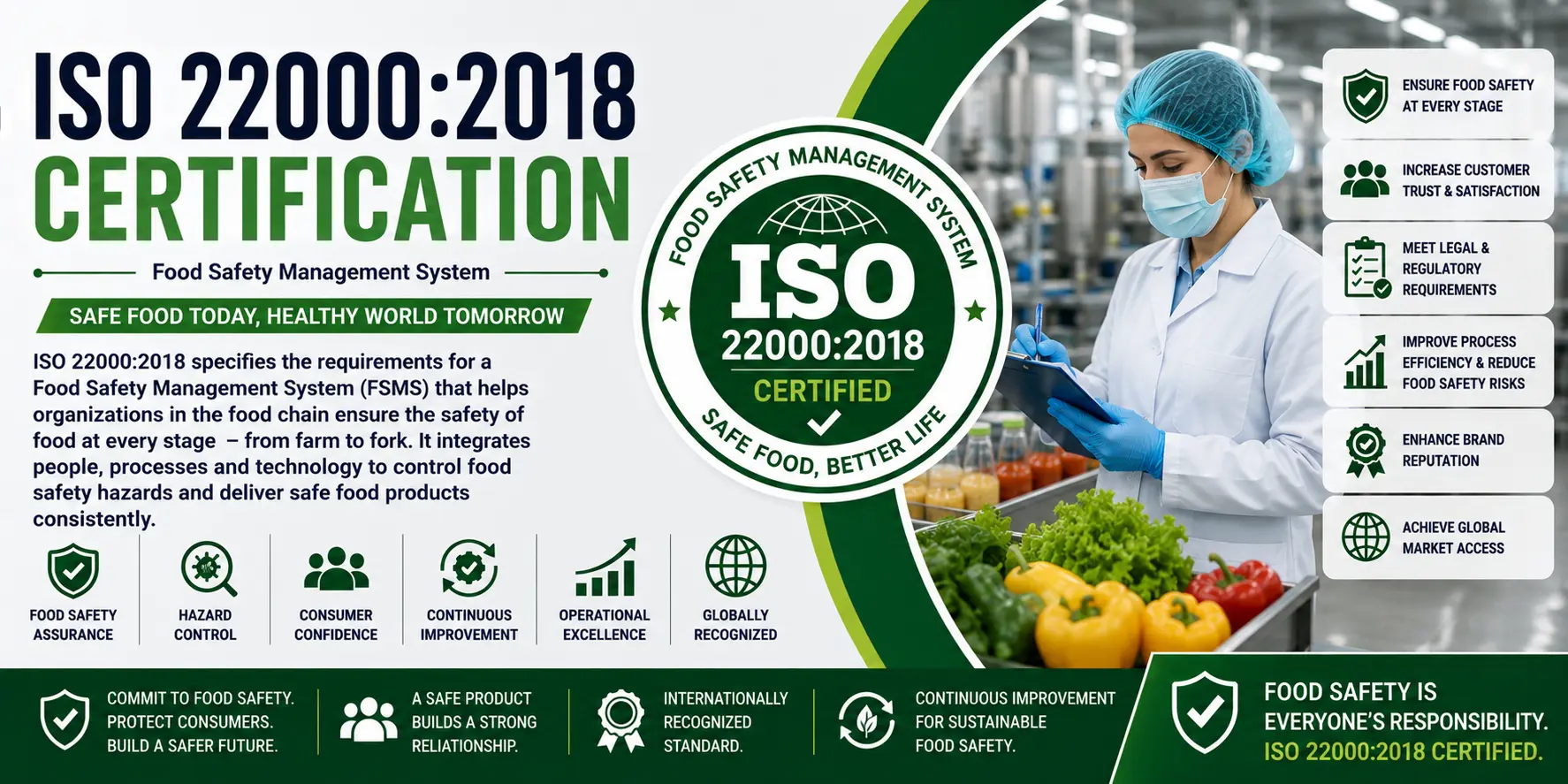
ISO 22000, Food Safety Management Systems - Requirements for Any Organization in the Food Chain, was first published in 2005. The standard provides international harmonization in the field of food safety standards, offering a tool to implement HACCP (Hazard Analysis and Critical Control Point) throughout the food supply chain.
The goal of ISO 22000 is to control and reduce to an acceptable level any safety hazards identified for the end products delivered to the next step of the food chain. An end product is defined as a product that will not undergo any further processing or transformation by the organization.
HISTORY OF ISO 22000:2018 CERTIFICATION
Since the first publication of ISO 22000 in 2005, users along the supply chain have been facing new food safety challenges, creating a need for the standard to be revised. The revised ISO 22000 standard was published in June 2018.
It is normal for an ISO standard to be revised. In fact, standards are reviewed approximately every five years to determine whether a revision is necessary and to ensure that they remain relevant and useful to businesses.
ELEMENTS OF ISO 22000:2018
The key elements can be described as follows:
INVOLVEMENT OF THE MANAGEMENT TEAM
Food safety is not just something to be handled by the quality department. It is a top-management issue. ISO 22000 focuses on the involvement of the management team, which has to develop the overall policy.
COMMUNICATION
As food safety hazards may be introduced at any stage of the food chain, interactive communication both upstream and downstream is essential. In addition, internal communication is a key element in avoiding misunderstandings and minimizing risks. A common vocabulary is a great help in this connection.
THE HACCP PRINCIPLES
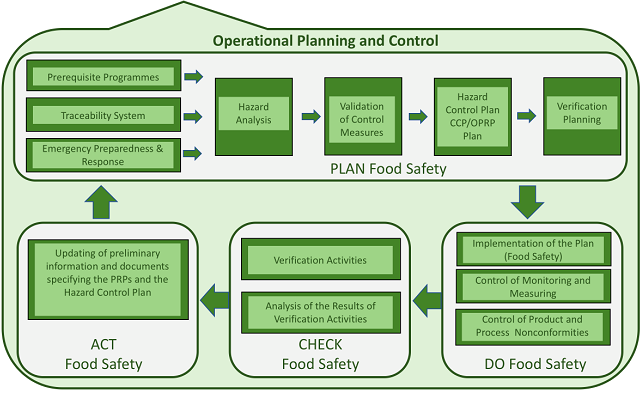
ISO 22000 combines the recognized HACCP (Hazard Analysis & Critical Control Point) principles with prerequisite programmes. The hazard analysis determines a strategy and the prerequisite programmes set up an action plan.
SYSTEM MANAGEMENT
ISO 22000 relies on a structured management system based on relevant parts of ISO 9001. It is possible to integrate them into one management system together with ISO 14001.
PREREQUISITE PROGRAM
The prerequisite programmes are classified into two subcategories. The Infrastructure and Maintenance Programs cover permanent features related to food safety. The Operational Prerequisite Programs are designed to reduce the risk of hazards in the product or processing environment.
OBJECTIVE SAMPLE OF ISO 22000
Examples can include goals to improve on-time delivery, reduce defects, control occupational health and safety risks, and reduce the Lost Time Injury Rate. The objectives should be designed to be S.M.A.R.T. (specific, measurable, achievable, realistic and time-based).
EXAMPLES OF FSMS OBJECTIVES
Target Period: Yearly
- To respond to customer complaints within X hours.
- To reduce the number of customer complaints by X% compared with the previous year.
- To maintain a minimum 'G-rating' for our third-party certification audit.
- To complete all verification activities within 5 days of the scheduled date.
- To complete food safety induction training for new employees before job commencement.
- To ensure that there is no Listeria monocytogenes detected in any of X products.
- To maintain a minimum of X% for all internal GMP audits.
- To have no food recalls during the present year.
BENEFITS OF ISO 22000:2018
- Demonstrates commitment to customer satisfaction.
- Gives suppliers and stakeholders confidence in your hazard controls.
- Helps put effective hazard controls in place across your supply chain.
- Introduces transparency around accountability and responsibilities.
- Supports continual improvement and updating of systems so they remain effective.
- Helps decrease returns as a result of reduced non-standard production and supports image protection.
- Embeds and improves the internal processes needed to provide consistently safe food.
- Helps establish discipline in production and transactions.
- Increases management efficiency.
- Helps decrease the quantity of harmed or unsafe products.
- Requires that all hazards that may be reasonably expected to occur in the food chain are identified, assessed and controlled.
- Ensures adequate control at all stages of the food supply chain to prevent the introduction of food safety hazards.