OHSAS 18001:2007 CERTIFICATION
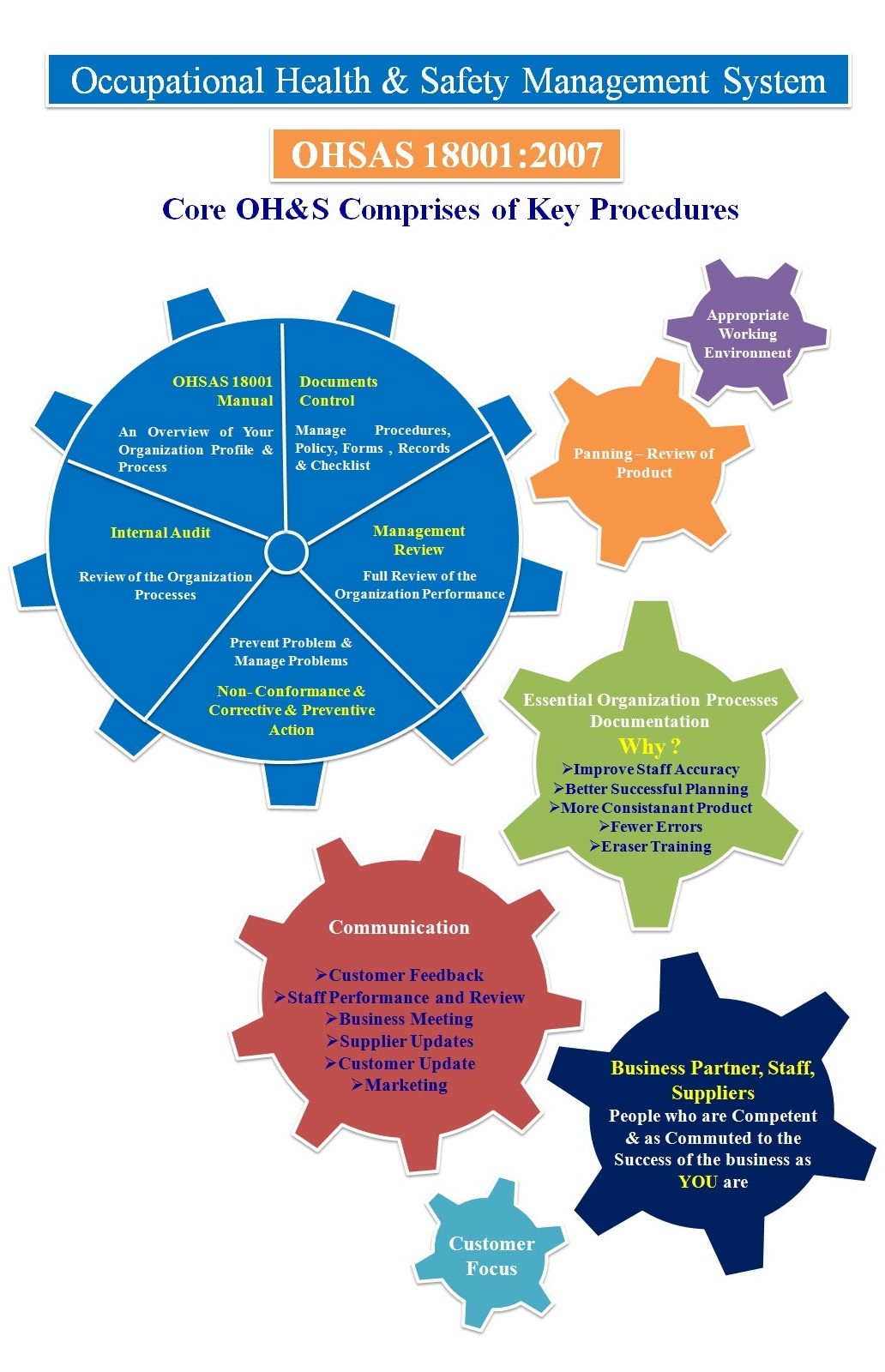
The standard defines the Occupational Health & Safety Management System requirements to which an organization subscribes. The organization develops the program to meet its policy, objectives and regulatory requirements and works towards continual improvement of the work environment and employee health & safety.
OHSAS 18001 is a globally recognized occupational health and safety management system. The standard defines the system for an organization related to the health and safety of employees and stakeholders. The standard considers prevention as an approach towards the health & safety of employees.
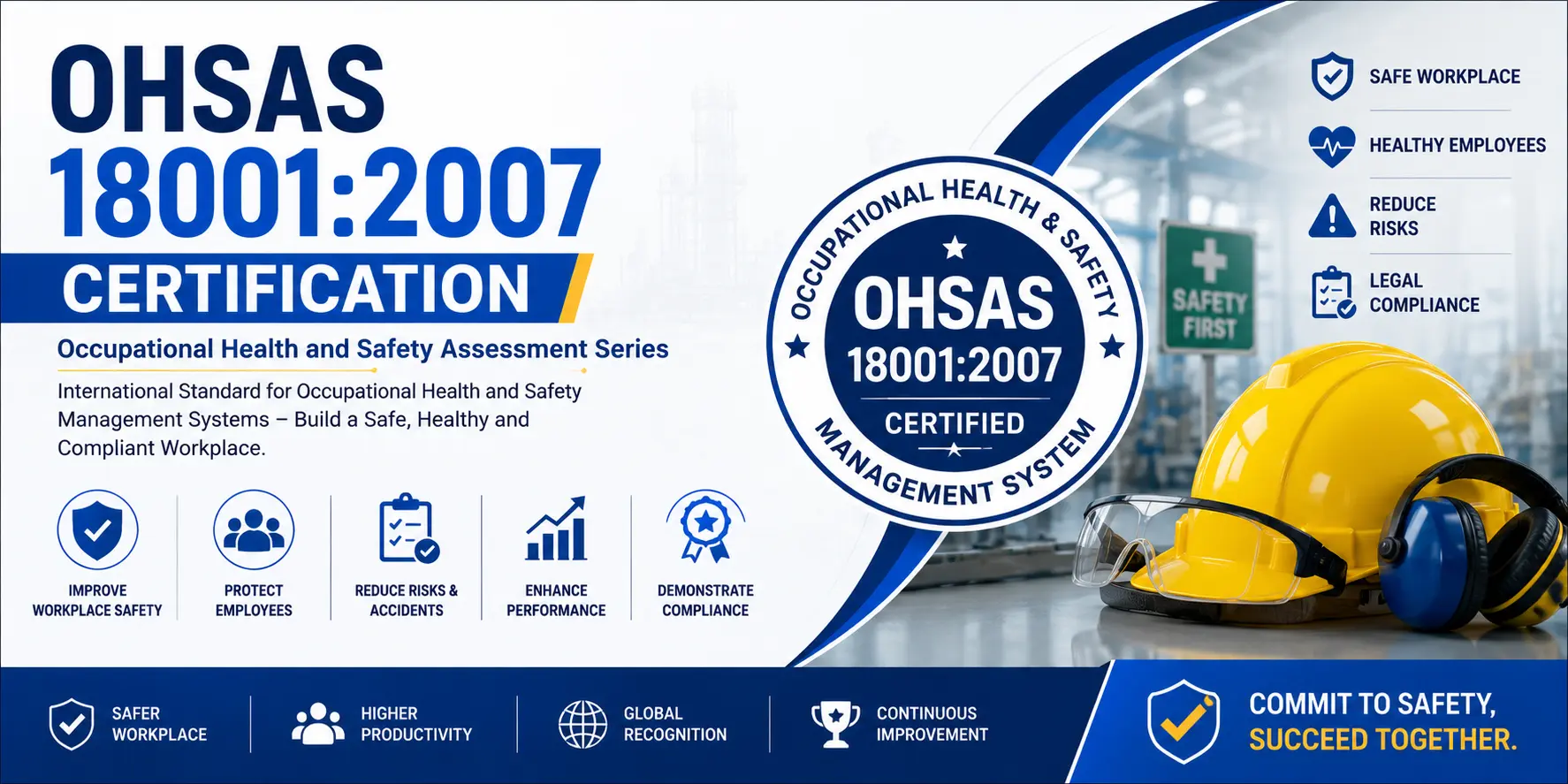
An OHSAS 18001 certificate establishes that your organisation is committed to safety and health at the workplace. This proactive approach helps the organization to maintain better long-term relations with employees and contractors.
The standard gives a framework to assess hazards related to processes, work environment and the associated risks. The standard demands establishing programs to reduce the risks and improve upon them. The revised 2007 version gives equal importance to occupational health.
An international standard, OHSAS 18001:2007 can integrate with ISO 9001 and ISO 14001 for environmental management systems. This is a preferred approach by management so as to take care of the risks related to products, environment and employees.
Organizations, irrespective of whether they are in the manufacturing or service industry, can benefit from implementing OHSAS 18001:2007 Occupational Health & Safety Management System, such as:
- Organizational commitment towards Occupational Health & Safety improvement and development of an internal system for identifying Occupational Health & Safety hazards and risks from processes and products.
- Development of an Occupational Health & Safety Monitoring Plan covering the stages of inspections required to control manufacturing or service delivery processes to eliminate, reduce or control health hazards and safety risks.
- HIRA (Hazard Identification and Risk Assessment).
- Increase community faith and stakeholder confidence.
- Reduce legal obligations related to product and service delivery, such as Factory Act and Factory Rules.
- Global market access in terms of export and global recognition.
- Independence from personal competency and high reliability of the Occupational Health & Safety Management System.
- Reduce accidents, incidents and legal non-compliances.
- Legal compliance with Factory Act, Factory Rules, Labour Laws, Petroleum Act, Explosive Rules, prohibition rules and poison rules.
- Register of Regulations and Operational Control Plan.
- Occupational Health & Safety concerned organizational approach.
- Reduce legal obligations and compliance inspections.