RoHS CERTIFICATION
ISO 22000 describes the requirements for operating an effective food safety management system integrating the use of the Hazard Analysis and Critical Control Point (HACCP) techniques and defined prerequisites for the safe production of food.
The ISO 22000 model is a systematic approach to developing, planning, validating, establishing, implementing, monitoring, verifying and improving the food safety management system. Implementation is split down into several distinct stages.
MANAGEMENT RESPONSIBILITY
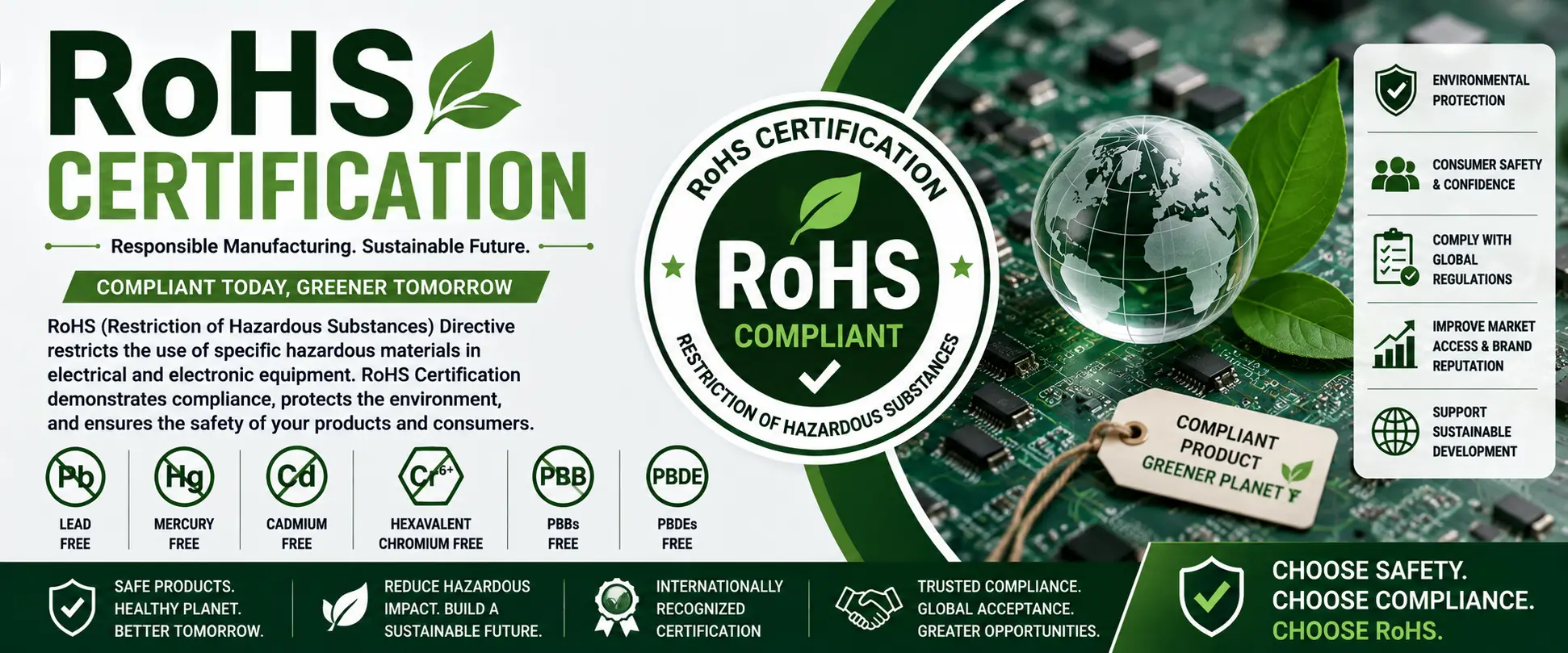
RoHS, short for Restriction of Hazardous Substances, is specific to the European Union. The law revolves around the handling of hazardous materials, ranging from the manufacturing to the disposal of the material. While created inside Europe for members of the European Union, other regions around the world have utilized and created offshoots of the RoHS. This includes nations throughout Asia (China, Japan and South Korea) and versions of it inside of North America as well.
Manufacturers of hazardous material must become RoHS compliant in order to sell and distribute the product inside of the European Union, which is exactly why it is so vital for a company to obtain these credentials. The specific process set in place to assist these companies is rather straightforward, so it should not prove difficult to follow through with the RoHS certification and RoHS compliance regulations.
In order to obtain the certification, it is necessary to seek out a third-party company that provides test reports of the material, material declarations directly from the supplier and what is known as a Declaration of Conformity. It is all about testing the material, making sure its housing, manufacturing and distribution are aligned with the regulations set forward by RoHS.
When working with these third-party organizations, they test the presence of different chemical compounds and components, including lead, mercury, cadmium, hexavalent chromium, polybrominated diphenyl ethers and polybrominated biphenyls.
BENEFITS OF ROHS
- Increase of communication across the supply chain serves as a platform for the implementation of REACH and other initiatives.
- Tighter process control, overall reduced number of defects and increased production efficiency.
- Increased skill levels in the global workforce due to retraining and knowledge transfer to Asia and less developed countries.
- Less leaching in landfills because WEEE contains less hazardous material and increased incentives for recycling because lead-free solder contains silver and gold.
- Pressure on other sectors such as aerospace and IT industrial controls, and countries to move to cleaner processes and reduced use of hazardous materials, such as China RoHS and Korea RoHS.
- Competitive advantage for EU manufacturers in markets where RoHS legislation is pending or contemplated.